Protecting the Solar Seashell Chime from Coastal Weather
 Jordan HaleStaff Writer
September 17, 2026. This assessment explores the engineering requirements for maintaining waterproof solar seashell lights in high-moisture environments. It is written for coastal homeowners and outdoor enthusiasts who require durable, weather-resistant garden accents.
I remember the first evening I hung a set of delicate-looking lights on my porch just as a late-summer squall rolled in from the Atlantic. The air turned heavy with salt spray, and the wind began to whip the chimes against the railing with a rhythmic, hollow clack. In those moments, you realize that outdoor decor isn't just about aesthetics; it is about the physics of survival against the elements. Many enthusiasts attempt to bridge the gap between beauty and durability through manual effort. According to Crafty Beach, creators often utilize DIY methods like the Shell and Pearl Solar Light project to repurpose indoor-grade items for the garden, but these often require significant reinforcement to handle a true downpour. The challenge with most decorative lighting is the vulnerability of the battery housing. When moisture seeps into a standard solar cell, the internal circuitry corrodes, leading to the flickering or complete failure that plagues so many garden ornaments. I have spent years testing how various waterproof solar seashell decorations handle these exact conditions, and the difference usually lies in the quality of the seals around the LED housing. Without a dedicated focus on moisture ingress protection, a beautiful chime becomes nothing more than a silent, dark ornament after the first heavy storm.
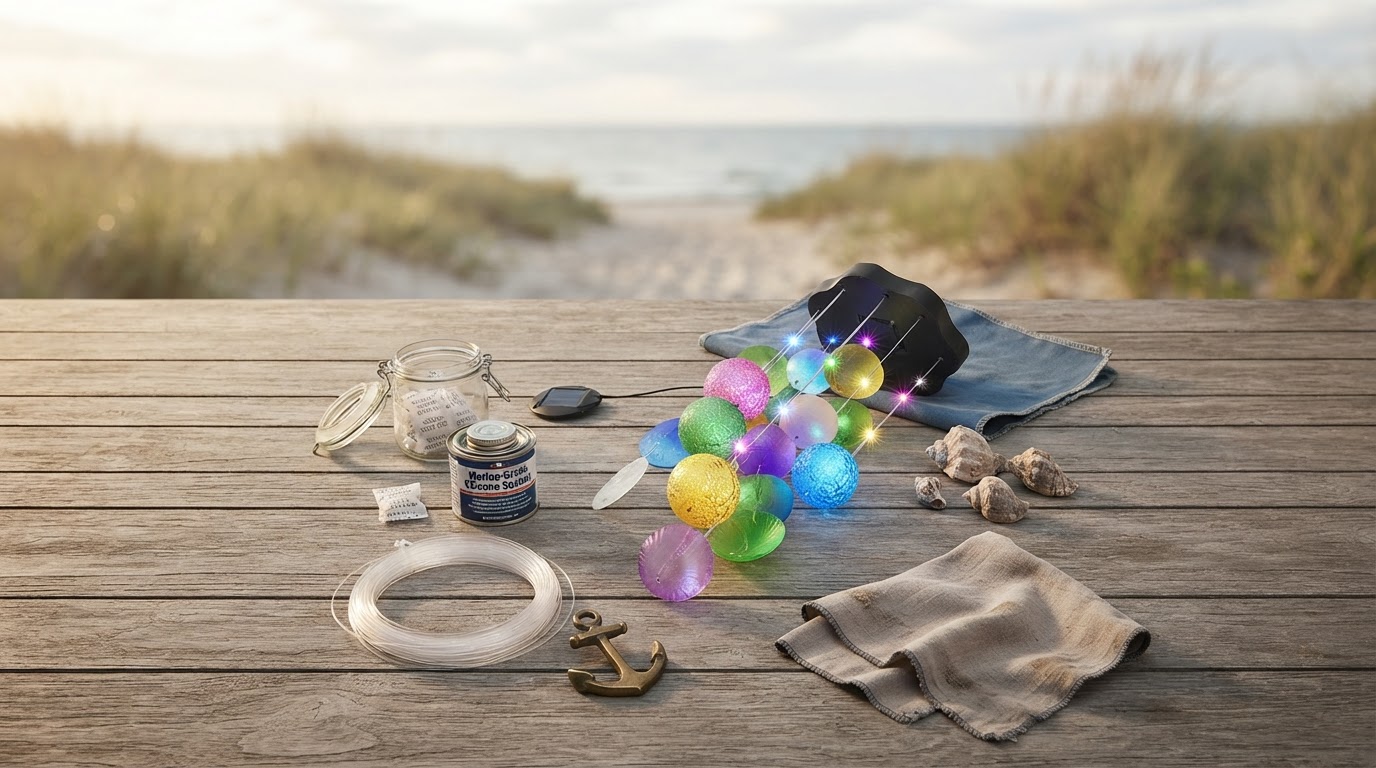
The Solar Seashell Chime addresses these structural vulnerabilities through a specialized design that prioritizes internal dry-zones. The first thing I noticed was the weight and density of the solar housing atop the unit. It isn’t just a thin plastic cap; it is a weighted, sealed compartment that houses the photovoltaic cell and the rechargeable battery. This design ensures that even when the wind picks up—a common occurrence when you are hanging coastal solar wind chimes for patio use—the electronics remain isolated from the physical movement of the shells. The seashells themselves are suspended by high-tensile nylon strings that do not fray or weaken when saturated with water, a critical detail often overlooked in cheaper alternatives. It turns out that the longevity of these lights depends as much on the suspension system as it does on the solar panel. Because the LEDs are embedded directly into the translucent shells, the entire unit functions as a cohesive, weather-shielded system. Unlike a led hanging seashell light that might rely on exposed bulbs, this chime uses the shell structure as a natural diffuser and protective layer. This internal placement means the light source is never directly hitting the rain, reducing the risk of short-circuiting during the humid nights typical of coastal climates. I keep coming back to the way the seals are finished; they are flush and tight, preventing the capillary action that often draws dew into the battery compartment of lesser products.
Selecting a light that survives the transition from a sunny afternoon to a stormy night requires a specific framework for evaluation. You must look beyond the initial glow and consider how the materials will react to constant UV exposure and moisture cycling. While some people find success with custom projects, such as those found in Sal's DIY seashell solar light project, commercial-grade units like the Solar Seashell Chime offer a level of consistency that is hard to replicate at home. When you are looking for waterproof solar seashell decorations, you should prioritize units that feature an integrated on/off switch protected by a rubberized boot. This prevents water from entering the one area where a physical break in the casing is necessary. Furthermore, the light-sensing technology must be sensitive enough to trigger even through the thickest coastal fog. I have found that placing these chimes in areas with at least six hours of direct overhead sun provides the best results for night-long illumination. Before you finalize your patio setup with a led hanging seashell light, run through this essential durability checklist:
- Verify the solar panel casing is made of UV-stabilized ABS plastic to prevent cracking.
- Ensure the suspension cords are weather-treated nylon rather than cotton or thin twine.
- Check that the LED bulbs are fully encased within the shell or a secondary waterproof housing.
- Look for a weighted top-cap to prevent the chime from tangling or flipping in high winds.
- Confirm the battery compartment uses a gasket seal rather than just a snap-fit lid.