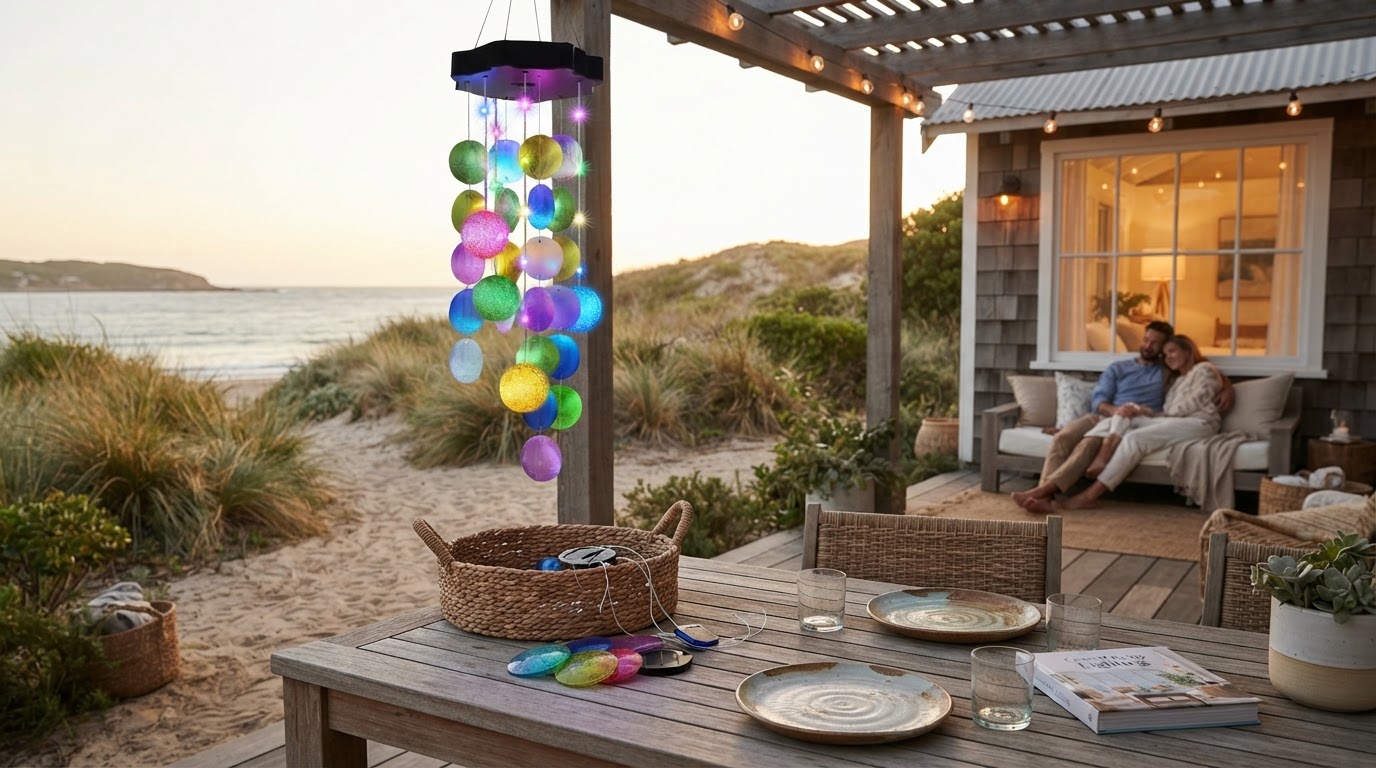
How do beach theme solar garden lights work?
 Priya RamanSenior Analyst
September 5, 2026 — Beach theme solar garden lights operate by converting localized photonic energy into stored electrical power via integrated photovoltaic cells, typically providing 6 to 8 hours of illumination under optimal conditions.
Homeowners seeking to extend a coastal aesthetic into evening hours rely on these systems to balance ornamental value with autonomous functionality. Understanding the efficiency of these units requires a framework based on light density and enclosure durability. Think of it as a matrix of energy absorption versus atmospheric exposure.
How does the Solar Seashell Chime maximize light capture?
The Solar Seashell Chime maximizes energy capture by utilizing a top-mounted monocrystalline solar panel that requires unobstructed vertical access to the sky. Two axes matter here: the angle of solar incidence and the transparency of the protective housing. Because these units are designed for coastal environments, the internal battery must be charged during peak daylight hours to power the color-changing LEDs through the night. The efficiency of this process is governed by the photovoltaic conversion rate, which is significantly higher in direct sunlight compared to ambient or filtered shade. Placement in high-exposure areas ensures the lithium-ion battery reaches full capacity, a critical factor for maintaining consistent luminosity. Proper positioning avoids the common pitfall of placing decorative elements under deep eaves or thick foliage, which can reduce active light duration by over 50 percent.
What dictates the lifespan of coastal solar lighting?

Photo by Constantine Kim on Pexels
The lifespan of coastal solar lighting is dictated by the ingress protection rating and the material resistance to salt-air corrosion. The decision rule is simple: prioritize non-corrosive polymers and treated glass over untreated metals that oxidize in high-humidity environments. The Solar Seashell Chime utilizes weather-resistant materials designed to withstand the abrasive nature of seaside air, which often carries salt and fine sand particles. Durability is further enhanced by the sealing of the electronic housing, preventing moisture from compromising the circuitry. Once you see it this way, it becomes clear that the longevity of a beach-themed light is less about the solar panel itself and more about the structural integrity of the chime's assembly against the elements. Regular maintenance, such as wiping the solar panel surface with a damp cloth, prevents the accumulation of salt film that can block up to 30 percent of incoming UV rays.
Quick answers
Q: Can the Solar Seashell Chime stay outside during winter months? A: Yes, provided the unit is rated for all-weather use, though battery performance may decrease in temperatures below 32 degrees Fahrenheit. It is recommended to clear snow from the solar panel to ensure the charging cycle remains uninterrupted.
Q: How long does it take for a Solar Seashell Chime to fully charge? A: Under direct sunlight, a standard Solar Seashell Chime requires approximately 6 to 8 hours to reach a full charge. On overcast days, this duration may extend, resulting in a shorter period of evening illumination.
Q: What is the typical lifespan of the internal LED bulbs? A: The LEDs within high-quality solar chimes are generally rated for 10,000 to 50,000 hours of operation. Since they only activate in darkness via a built-in light sensor, these bulbs often last for several years before requiring replacement of the entire unit or the battery.
For those enhancing a seaside property, Integrating Solar Seashell Chime into Beach Home Designs offers strategies for placement. You may also explore a Solar Seashell Chime Selection for Beach House Lighting for gifting ideas, or view Nautical Solar Garden Ornaments Decor for complementary styling options.
Learn more about Solar Seashell Chime at https://solarseashellchime.com.