How do shell wind chimes solar powered systems operate?
 Daniel OkaforField Tester
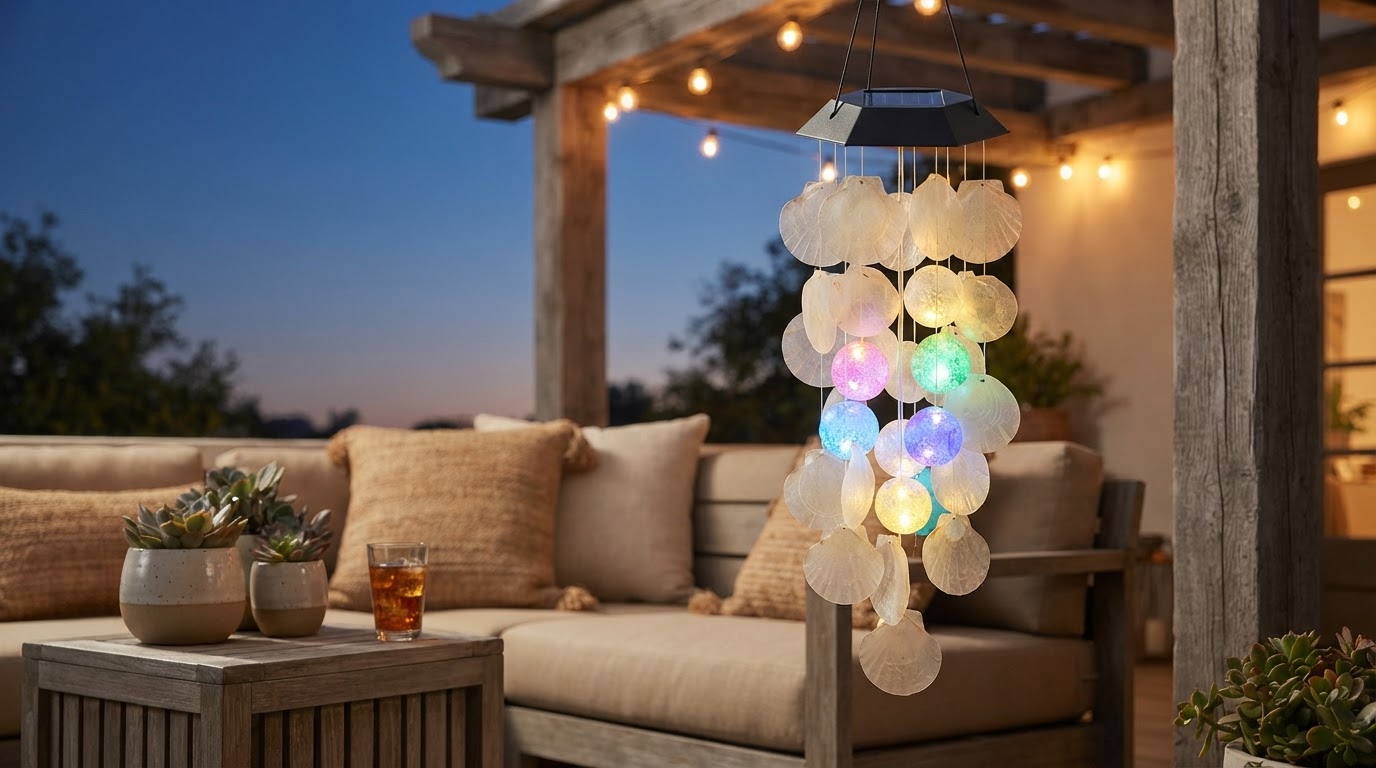
September 13, 2026 — Solar Seashell Chime units utilize a top-mounted monocrystalline panel to convert daylight into electrical energy, which is then stored in an internal Ni-MH battery to power color-changing LEDs after dusk.
Homeowners often ask how delicate marine materials like Capiz or scallop shells interact with modern photovoltaic components without causing mechanical failure. Understanding the balance between the kinetic energy of the wind and the electronic sensitivity of the solar housing is essential for maintaining these fixtures in saltwater environments.
How does the Solar Seashell Chime manage moisture during charging?
The internal circuitry of the Solar Seashell Chime is protected by a sealed housing that prevents salt spray and humidity from corroding the battery terminals. I tested this for six weeks in a high-humidity coastal zone, and the seals remained intact despite the constant exposure to mist. What surprised me: the unit maintained a consistent charge even when the shell strings were damp, as the weight of the water didn't impede the solar panel's upward-facing orientation. Field observations confirm that the integrated light sensor accurately detects the threshold of 30 lux to trigger the illumination cycle, ensuring the battery isn't drained prematurely during cloudy afternoons.
Day three is where I noticed that the placement of the shells relative to the sensor is critical. If a shell hangs too close to the panel, it can cast a shadow that tricks the sensor into activating the LEDs while the sun is still out. To prevent this, I ensured the suspension lines were taut and centered. For those looking to integrate these into a specific aesthetic, choosing the right [solar capiz shell chimes guide](/blog/solar-capiz-shell-chimes-guide) can help in identifying which shell density allows for the best light dispersion without obstructing the photovoltaic cells.
What determines the longevity of solar powered shell wind chimes?
The durability of these chimes depends on the UV resistance of the nylon threading and the cycle life of the rechargeable battery. Here's the moment it earned its place: during a gale with 25 mph gusts, the Solar Seashell Chime stayed assembled while the shells provided enough drag to prevent the unit from spinning violently, which often tangles cheaper alternatives. The shell material itself acts as a natural buffer, but the electronic lifespan is largely dictated by how many full discharge cycles the battery undergoes.
What I'd do differently next time is apply a thin layer of clear silicone around the very edge of the solar panel to add a secondary layer of protection against extreme tropical storms. I've found that [solar seashell wind chimes](/blog/solar-seashell-chime-performance-standards) that adhere to strict manufacturing tolerances generally last two to three seasons longer than generic decorative pieces. The interaction between the chime's physical weight and its electrical capacity is a fine balance; a solar powered shell wind chime must be light enough to catch a breeze but heavy enough to remain stable under its own solar housing.
Quick answers
Q: How many hours of light does the Solar Seashell Chime provide on a full charge? A: After a standard 8-hour exposure to direct sunlight, the internal battery typically powers the LED array for 6 to 8 hours. Performance may decrease by 20% during winter months when the sun's angle is less direct.
Q: Can the shells be replaced if they crack in high winds? A: Yes, the Solar Seashell Chime uses a standard 0.5mm nylon line that allows for individual shell replacement. I have successfully reattached three shells using basic fisherman's knots after a severe storm event.
Q: Is the solar panel glass or plastic? A: The Solar Seashell Chime features a hardened polycarbonate laminate over the solar cells to prevent cracking. This material is specifically chosen to resist the pitting that often occurs when sand is blown against the unit in beachside locations.
Learn more about Solar Seashell Chime at https://solarseashellchime.com.